
Opening Launch: September 19, 4–8 pm
Passage Arts will open with the monumental exhibition James Surls: From the Old Growth, offering an expansive reading of Surls’s work and spanning some 50 years of his art, with 25 sculptures and 23 drawings on display.
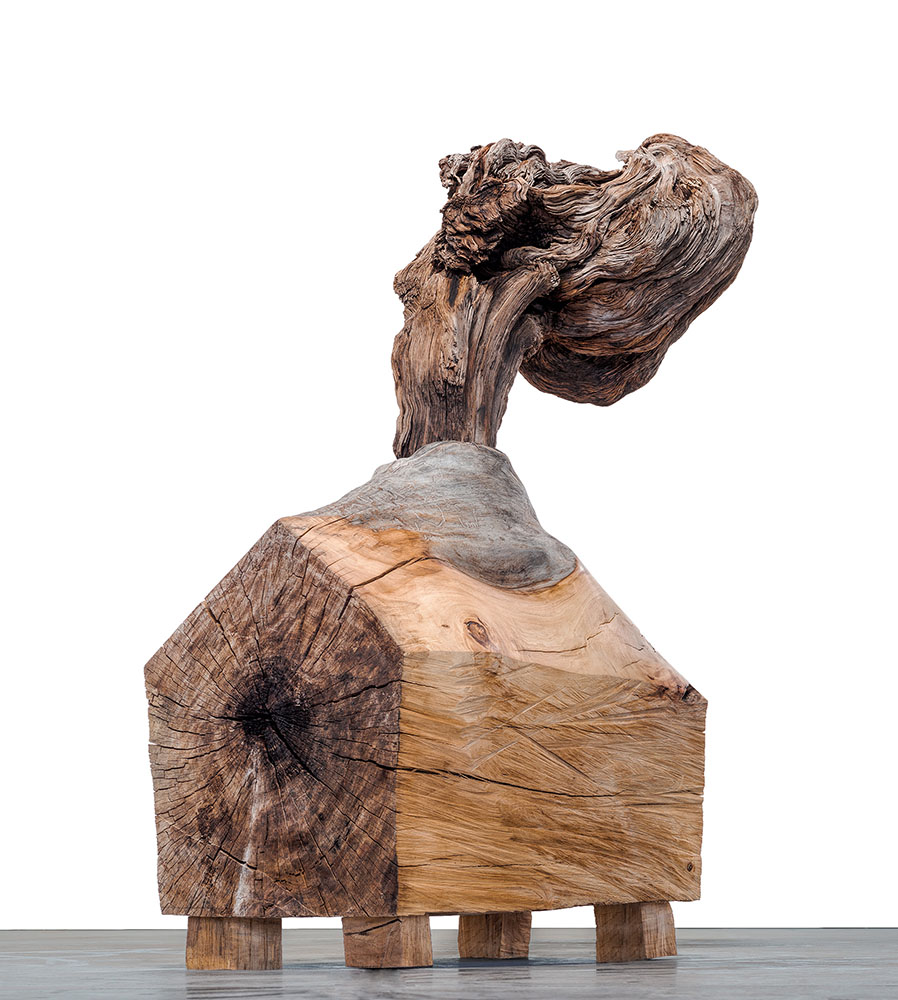
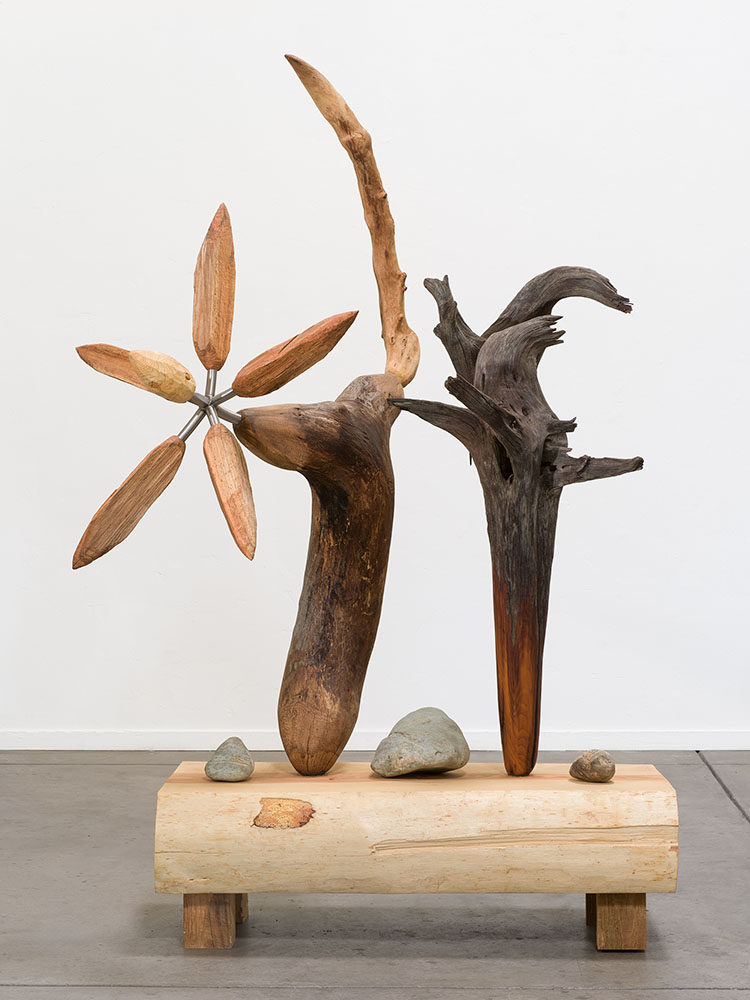
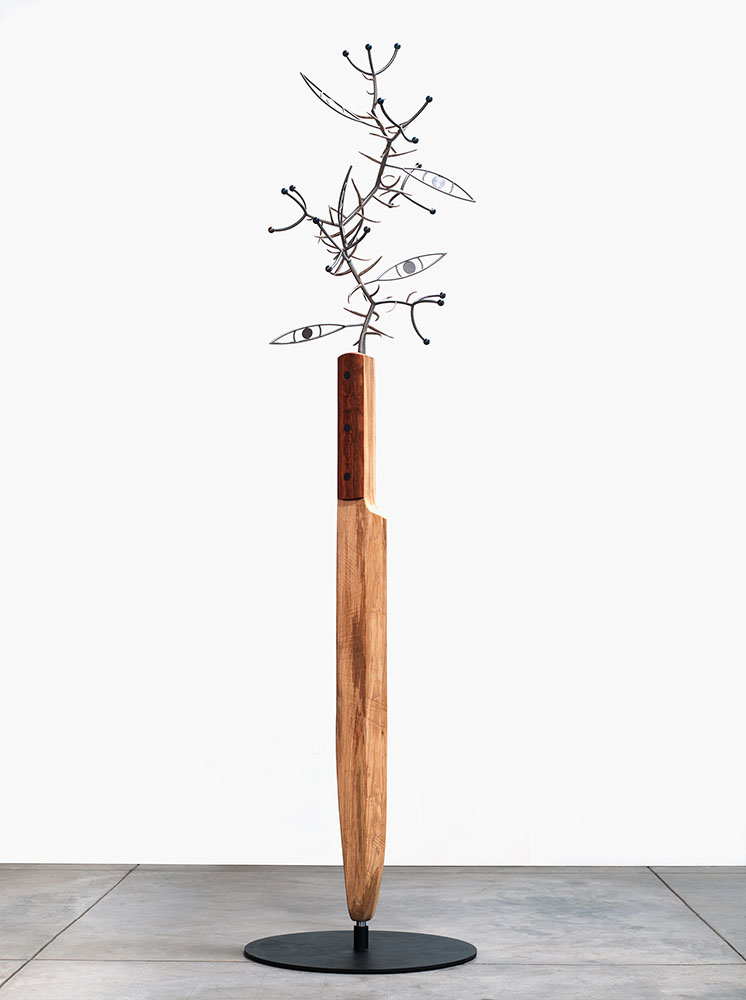
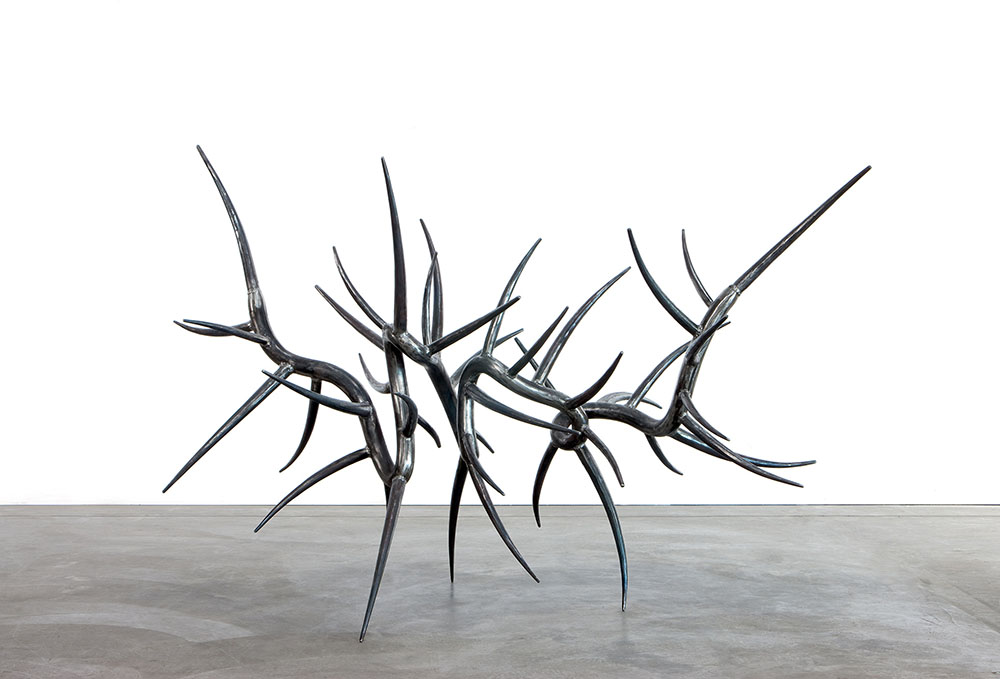
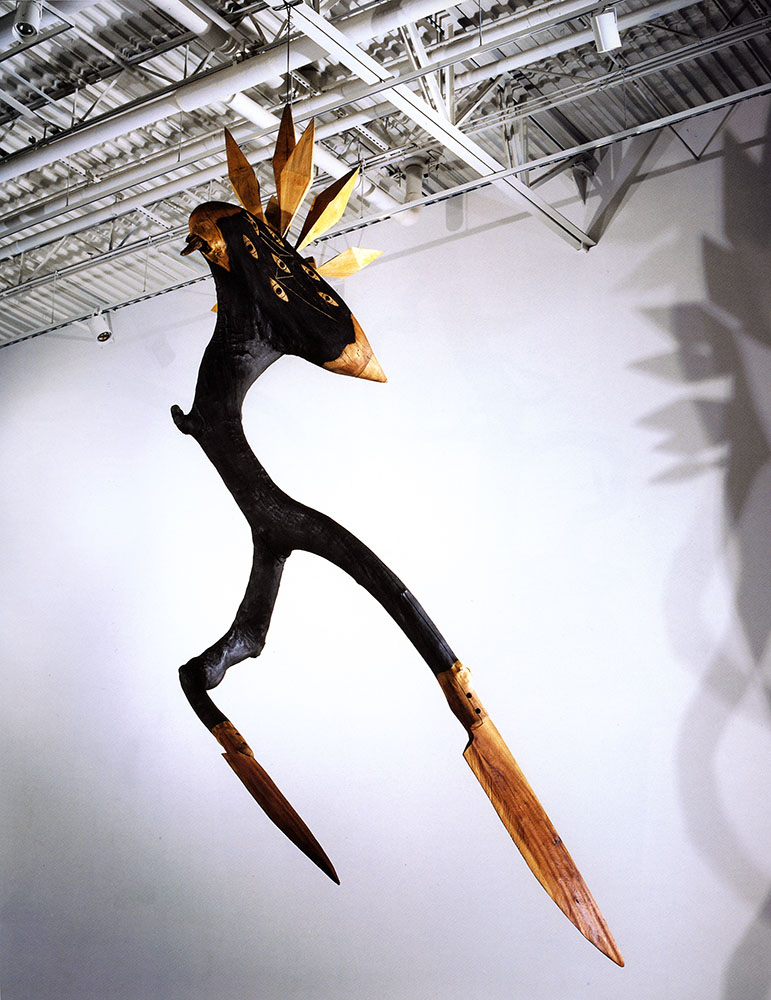
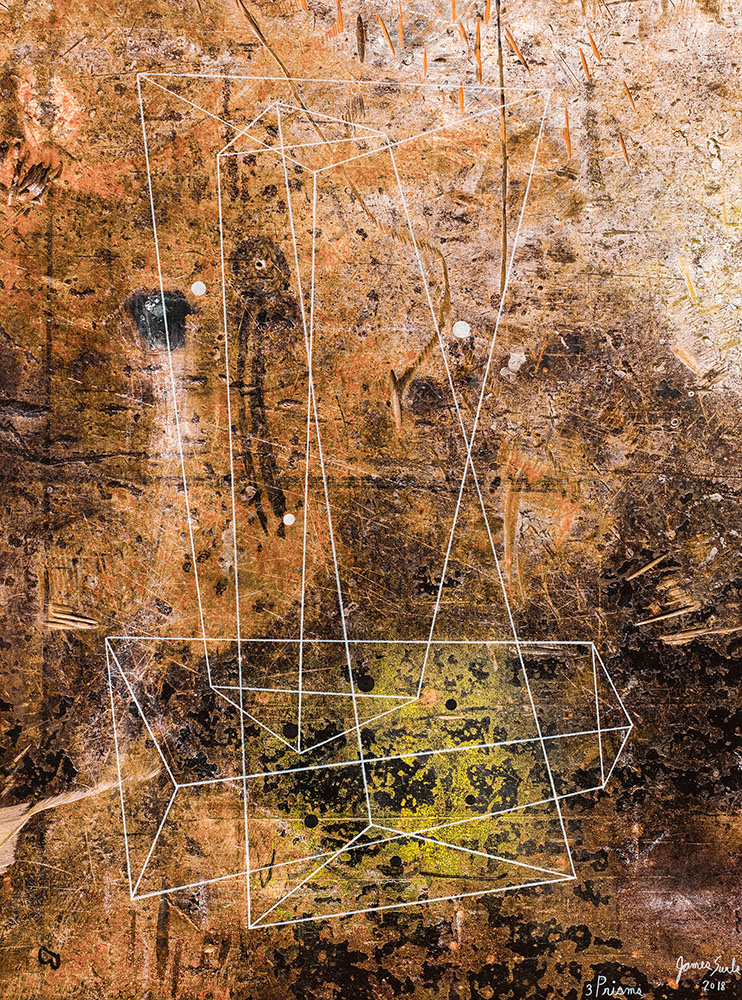
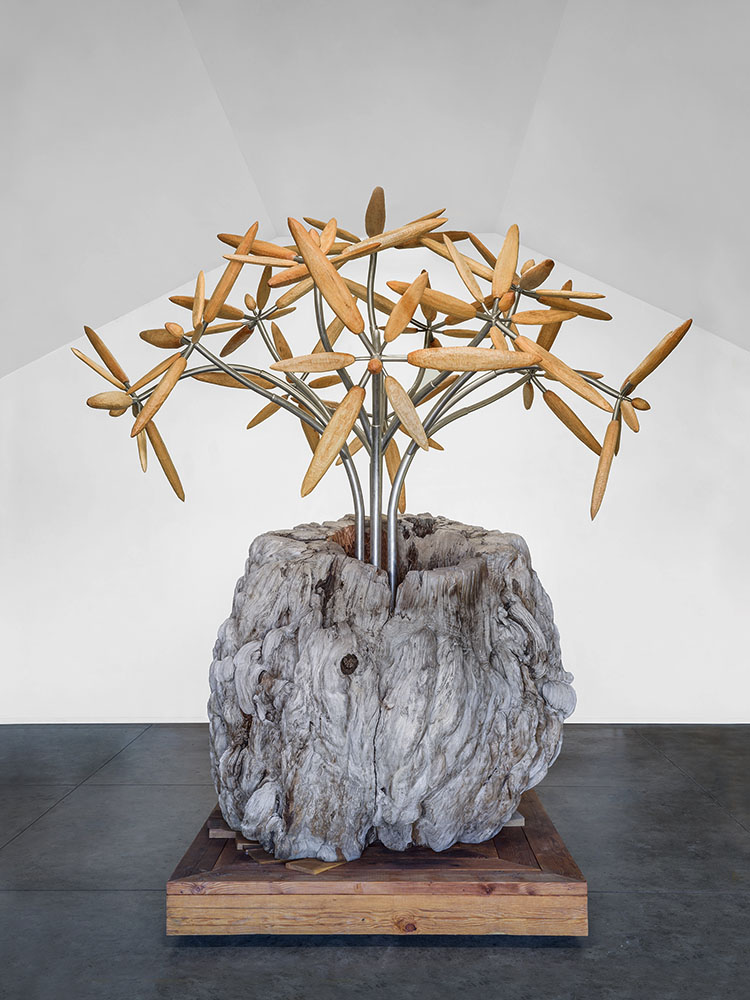
Kirk Hopper Fine Art is pleased to announce the launch of Passage Arts in conjunction with the monumental exhibition James Surls: From the Old Growth. Passage Arts is a historic industrial warehouse situated between Fair Park and downtown Dallas. Featuring a 7,500 square foot exhibition space with 28 foot ceiling height and original clerestory windows, it provides a gateway to distinct experiences in art—a communion that offers both origin stories and new beginnings, while challenging viewers with the core issues of our times. The inaugural exhibition establishes Surls, a lodestar of Texas sculptors, as a major 20th and 21st century American artist. From the Old Growth spans some 50 years of his art, including 25 sculptures and 23 drawings. The title refers to the “anchor” or centerpiece of the exhibition, a 16,000 pound redwood burl sculpture with curvaceous “stems” tapering to enormous flower appendages of fir and oak. At 20 feet high and 23 feet wide, the grand-scale sculpture induces the consciousness of earth’s immemorially surging mass, catching the viewer’s breath upon entry.
From the Old Growth offers an expansive reading of Surls’s work, focusing on its raw, ferocious power and strong sense of unity. In this respect, the notions of repertoire and cycle hold the key to understanding his art in which certain themes and symbols regularly occur yet are constantly renewed. The exhibition conveys his ongoing ability to give contemporary relevance to time-honored issues of memory, bodily awareness, the natural world, an excavation of the human spirit, and the mystery of our existence. Few artists make the world seem more wondrous—and frightening—than Surls, more worthy of exploration and veneration. Through the chop of an axe, the cut of the chisel or welding of industrial metal, forms and symbols spring at us with unnerving ferocity—flowers, birds, beaks, eyes, prisms, diamonds, vases, needles and knives. Indeed, if he is the shaman calling up life’s spiritual forces, the myth is entirely his own. Surls takes us places we never knew we wanted to go, asks questions we never considered, and introduces us to subjects that suggest the worst and best about us.
At Passage Arts, Surls’s vision is of another world—a metaphysical quest of the mysteries and terrors of nature, as well as the fragility and absurdity of human life. The gathering of sculptural modes—hanging, moving, standing immobile—presents an alternate place, another universe into which we absorb what is unknown and incommensurable. Some works achieve this through untrammeled beauty, desire and passion; others do so through expressions of acute physical pain and psychological stress. What does Surls know and how is that manifested in the work? What can he tell us about the meaning of life, about transcendence? How do his sculptures transport us, change us—glimpses of awareness or profound breakthroughs of revelation that linger in our conscious selves?
All of the sculptures display a fondness of paradox and joining opposites in balance: change and constancy, inwardness and aggression, female and male powered conventions. Artists teach us how to see and feel. Artists push us out of our comfort zones. Significantly, Surls is conscious of the violence people have done to one another and to the earth—a kind of wound living beneath the skin. He is also an artist who, through all the destructive centuries of our history, has kept alive the vision of peace and generosity and humility.
Although he makes use of the Surrealist’s exploration of the unconscious—the dream, the nightmare and erotic fantasy—he also touches base with the fundamental Modernist movements, seizing and transforming their planar organization of form and abstract language. He then mixes elements from American primitive images and folk art, as well as animistic totems of the Dogon and Inuit. Admittedly, Surls has been moved by the spiritual urgency of William Blake, the British Romanticist whose visions were the source of his poems and drawings. Throughout the decades, critics have noted the influence of Alexander Calder in the facility with line and deeply immersed visions of the cosmos; Giacometti in his metaphoric and hybrid personages that straddle the human and animal or exist in conditions of becoming. Louise Bourgeois’s visceral intuitive art that often functions on animistic levels seems relevant, so is Yayoi Kusama’s use of dot and circle intensive art that reconnects with the visionary. There are echoes, as well, in the blacksmith’s persistence of David Smith to temper steel with a kind of ductile irony.
As we walk through the 15 foot doors of Passage Arts, there’s an eerie sensation of being drawn into the fires. Stepping into From the Old Growth is to feel a kinship with ancient working rhythms, with totem builders of early primitive societies, with ancestral memories from deep time. In that instant, we enter a gateway initiated into the world as it is, a crosscurrent of emerging patterns and shadows, a world that changes and transforms us in the moment of contact. To traverse Surls’s sculptures in this environment is to sense a reflex we may not have felt so clearly before—skin, pull, sensuousness, illusion. We approach the colossal From the Old Growth (2022) as a paean to nature’s forces, taking in its crevices like gulps of air after escaping a miasma. The suspended sculptures, Walking with Diamonds (1995) and She is With the Diamond (1995) show Surls to have chiseled pine, oak and magnolia into a pair of “figures” more powerful than any mythical beasts. Suggesting the truncated bodies of muscular animals that lunge, twist and recoil, they stretch out their legs in a graceful and terrible dance. Their feet—carved knife blades—are as sharp as ice picks. To walk around these pieces is to sense insecurity, danger, peril. They are shapeshifters, seething with an almost feral desire. At times, the sculptures become charged fields of their own energies, and when they meet, they give off brilliant sparks. The striding “legs” and flailing “tentacles” of the steel floor sculpture, Rough God 5 (2010) seemingly propel themselves toward us. Surls’s fluid gestures unfurl areas of serpentine circuitry and sinew of monstrous tumor formations in the process of unbridled growth. The effect is both menacing and beckoning. We see it as a living organism that exists in our own environment and relies on the same air, earth and water for survival.
Surls doesn’t aim for a comforting sort of art, nor does he believe in the art object as one of passive contemplation. Rather, he intends the work to be a provocation, a kind of shock treatment that jolts viewers into an examination of their own values and behaviors. All of the suspended and free-standing sculptures in From the Old Growth tend to be prickly, abrasive and confrontational. They move us with the rawness of their exposure, the brute images of human life experienced close to the bone.
In the cavernous space of Passage Arts, the sculptures speak to us intimately, as if they were rendered from a great depth in the artist himself. At 83 years, a vibrating, unstable identity shimmers into Surls’s being. For that reason, From the Old Growth is the most important exhibition of his six decade career, compelling us to recognize that what matters is not just what we see but what pulls us close and why, what private histories we bring to the encounter, what expectations and tools. At Passage Arts, Surls takes us on a journey bound for redemption or ecstasy—a twining path driven by wind and weather, necessity and circumstance, but never straying far from its origin stories.
Toward that end, From the Old Growth firmly establishes Surls’s legacy as a prophetic visionary and iconic American artist while also staking the kind of experiential relevance hungered by a new generation of viewers. Surls possesses that relentless force, drilling deep over a lifetime. In this increasingly risk averse and uncertain climate, an installation of such magnitude is not likely to be undertaken by a mainstream museum. The entire gathering feels especially resonant in the spiritual atmosphere of our current era, where every human endeavor is translated into ratings, clickbait and luxury branding, forces that push away from the capacity to move us, sensitize us and produce new forms of ideas and emotions. From the Old Growth brings us back to a sturdy core where creativity is unpredictable, uncontrollable, and incessantly passionate.
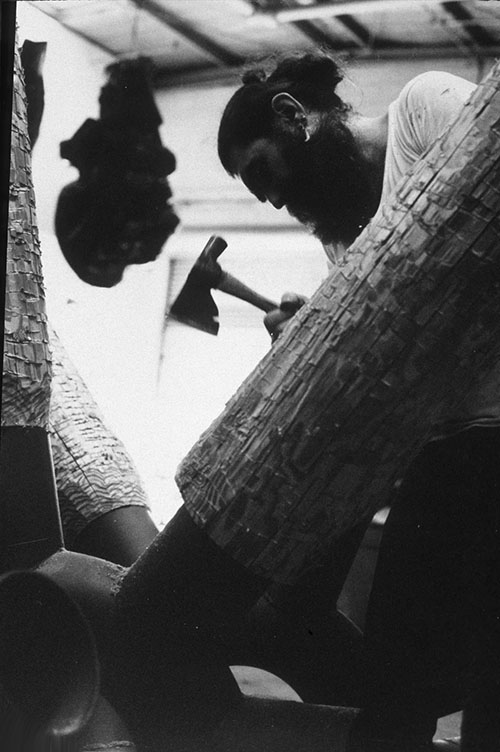
An art exhibition, by its very nature, gathers creative forces into a concentrated arena to be witnessed and felt. The exhibition titled From the Old Growth affords the opportunity to show sculptures that would be difficult, and in some cases impossible, to display in other spaces due to their size. Because I feel these sculptures emit an aura of timelessness and speak a language from below the level of consciousness, I believe it is important for the space to hold the work without pretense. These were important factors in deciding to do this exhibition: simply put, the space was ripe for it. Kirk Hopper saw the building’s potential and opened the door for the artwork to walk in.
The seed for this exhibition was planted some 50 plus years ago when my career as an artist first garnered notice during a renegade exhibition in a loft space above Whites Cafe, across the street from the main entrance to Fair Park in Dallas. It was at that exhibition that the then Director of the Dallas Museum of Art, Harry Parker, walked in and bought a sculpture for the museum. Now the long arc of a full career traces back to its beginning and completes life’s orbit started those many years ago.
This exhibition also comes at a time when Charmaine and I are deep in the process of leaving one geographical terrain for another. We staked our claim on the wooded knolls and in the creek bottoms of East Texas, flourishing there for many years. Then 30 years ago, we walked a high wire to snow capped mountain ranges that give life to raging rivers spreading across the flats of fertile valleys. Now here we are, moving from this high, dry atmosphere on the mountainside back to the moist confluence that defines the reality of the Big Thicket of East Texas. Life is change, so I change with it.
This exhibition is the manifestation of years of hard work and creative living and in many ways is a metaphor for the compacted moments Charmaine and I have spent on life’s dance floor. Our way was to risk it all and now we do again. We are packing the train for the long climb over the passes, then making our way eastward across the high plains of West Texas back to the forest, back to the wooded beauty that gave us strength and resolve for what we not only had to offer each other, but also the community at large. I go with the voice from the old growth.
Terrell, Texas
James Surls (b. 1943; Terrell, TX) is an internationally recognized artist, widely known for his monumental sculptures, drawings, and prints. He utilizes symbolism, pattern, and rhythm to illustrate his reverence for the natural and spiritual worlds.
Surls’ works can be found in public, private, and museum collections throughout the world, including: the Centro Cultural Arte Contemporáneo, Mexico City; the country of Singapore; Museum of Modern Art, New York, NY; Smithsonian American Art Museum, Washington, D.C.; Solomon R. Guggenheim Museum, New York, NY; and the Whitney Museum of American Art, New York, NY. He is a recipient of a lifetime-achievement award by the International Sculpture Center and a National Endowment of the Arts Fellow.
Surls currently resides and works in Carbondale, CO where he has lived since 1997. He also maintains his studio and land in Splendora, TX.
845 S. Trunk Avenue
Dallas, Texas 75210
214-760-9230
Near I-30 and I-45